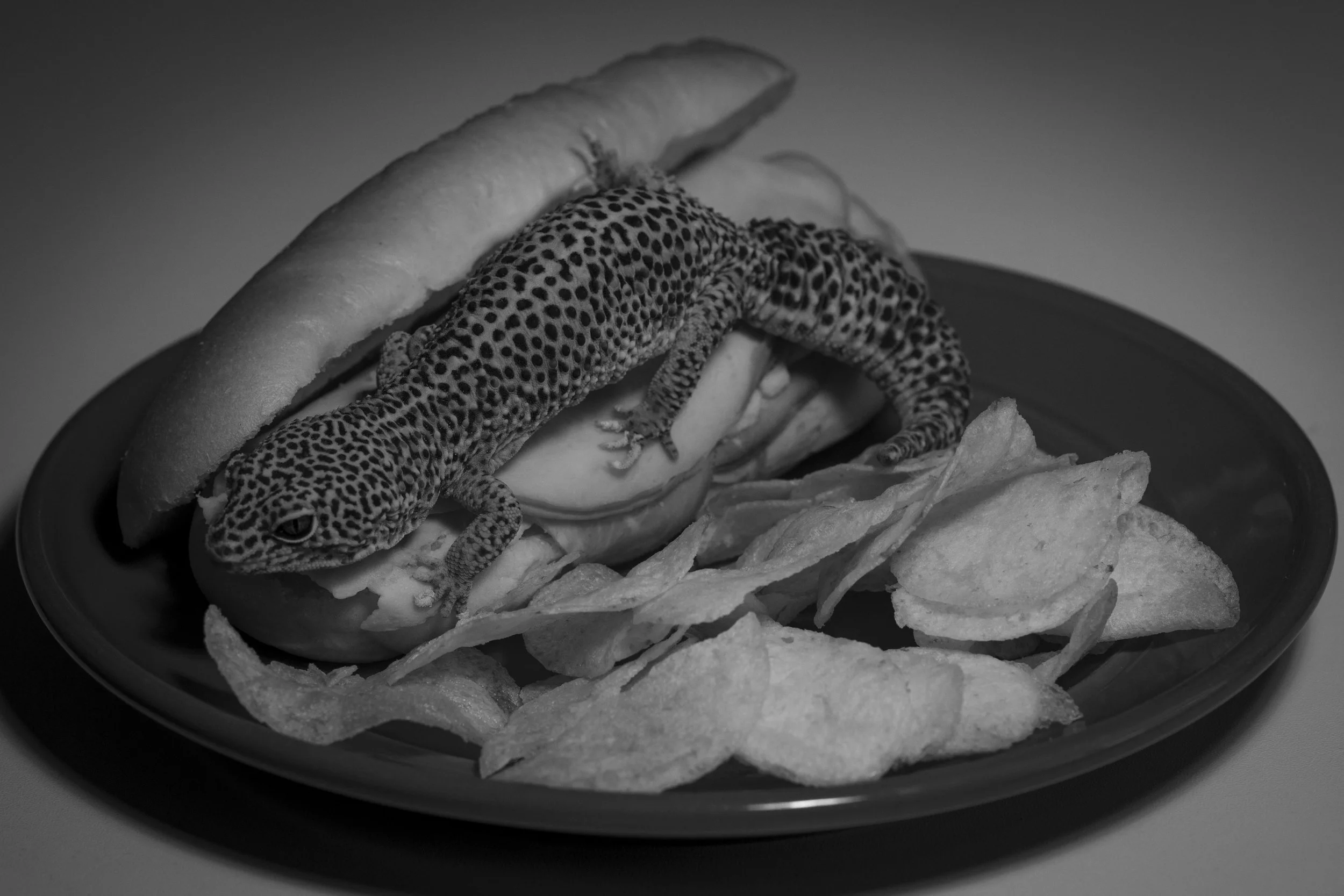
THE FOOD NETWORK
The Food Network stems from my experience living with celiac disease and the complicated relationship it has created with food. We are taught that food is nourishment, comfort, and celebration, yet for some bodies it also carries the possibility of harm. Every meal I consume becomes an exercise in trust, and a negotiation between survival and risk.
After my diagnosis, I found myself questioning everything I ate. Restaurant menus, ingredient labels, and foods marketed as "safe" became sources of uncertainty. The more I searched for certainty, the more elusive it seemed. That anxiety shaped my relationship with food in contradictory ways: at times avoiding it altogether felt safer than becoming sick, while at others I found comfort in familiar foods simply because they felt predictable. Fear and dependence became inseparable.
While rooted in this personal experience, the work expands beyond it. We exist within a food system that asks us to trust products, labels, manufacturers, and institutions we rarely see. We are surrounded by foods engineered for convenience, longevity, and consumption, while health is often framed as an individual responsibility. Food becomes both a necessity and a threat, or pleasure and suspicion.
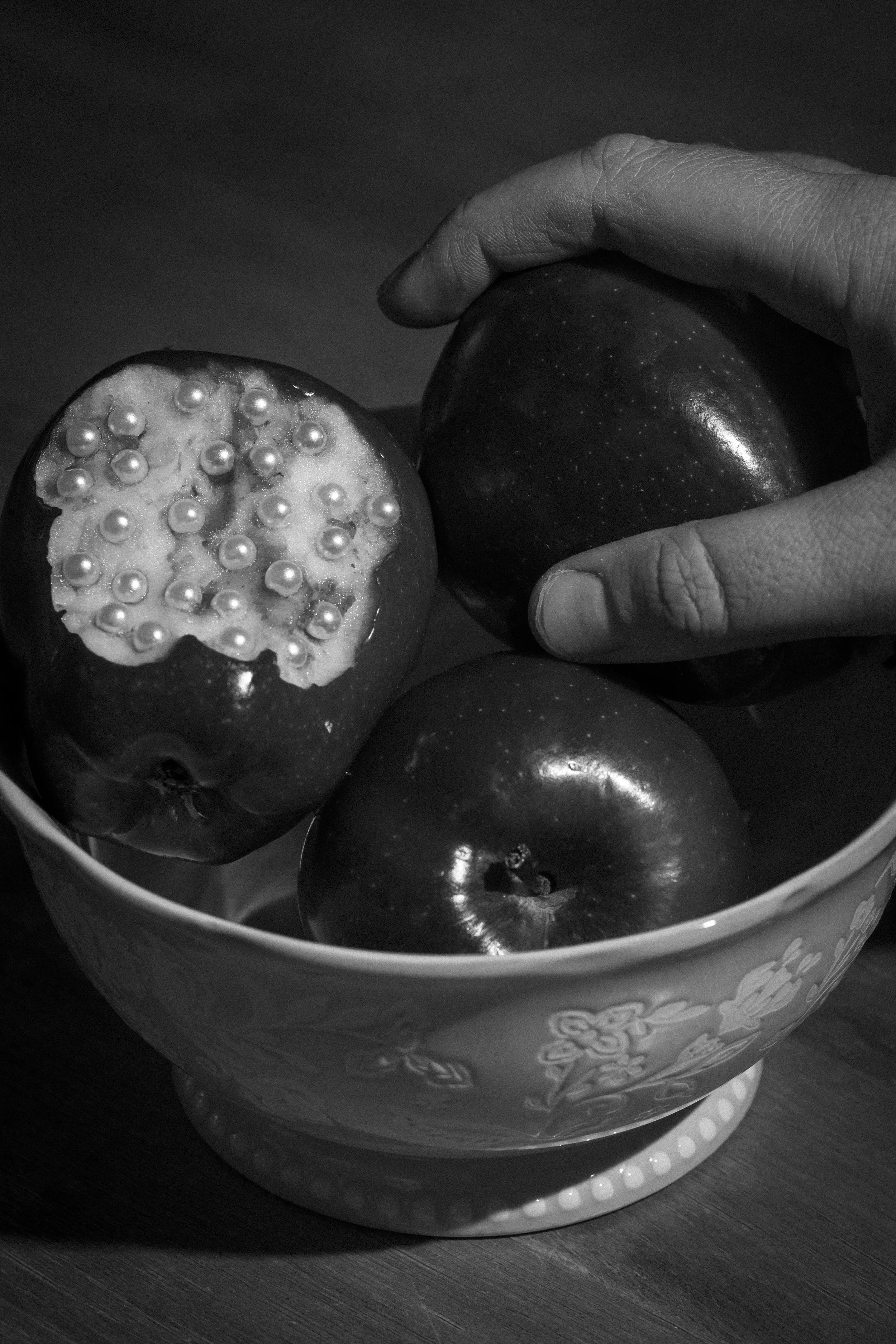
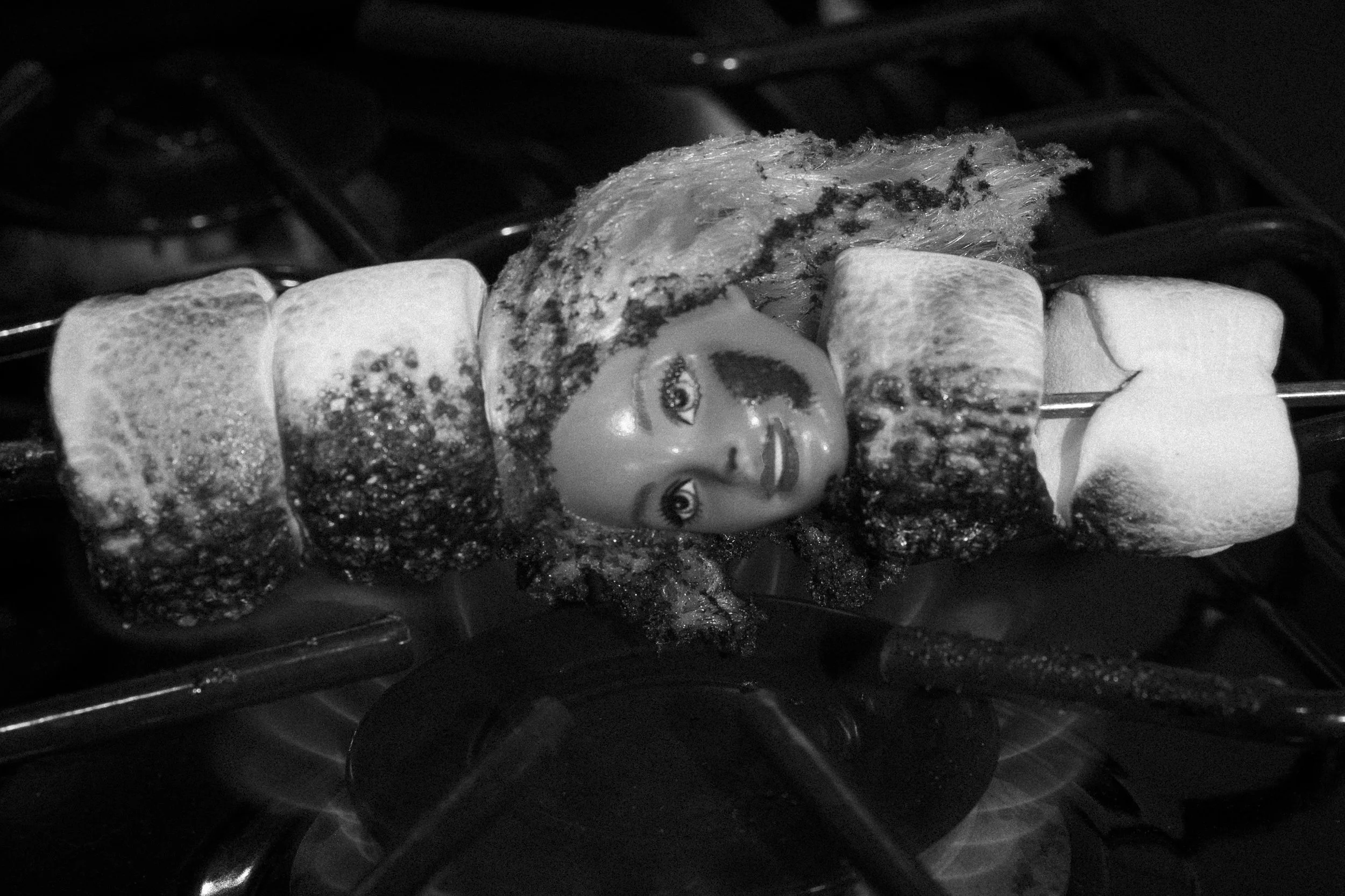
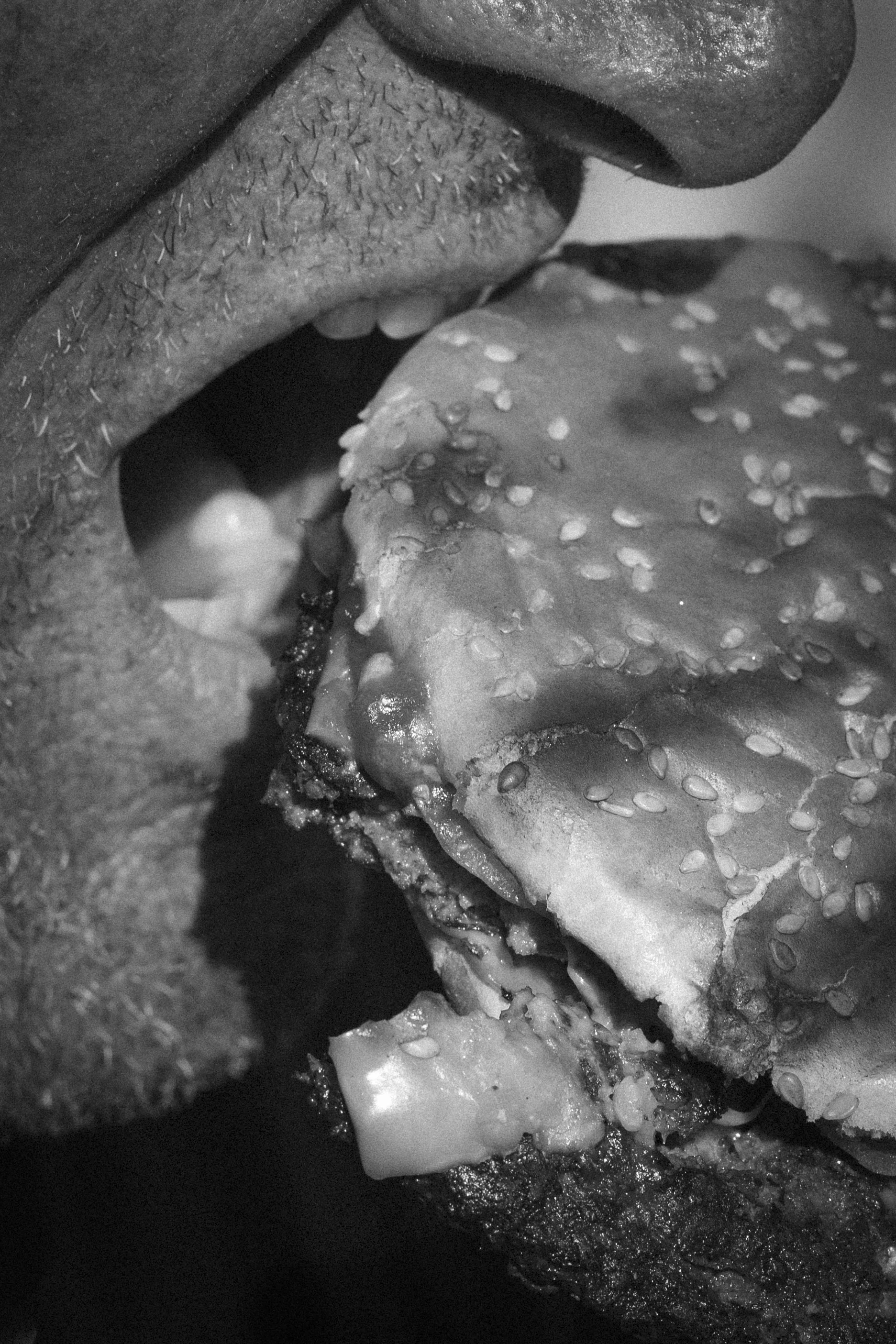
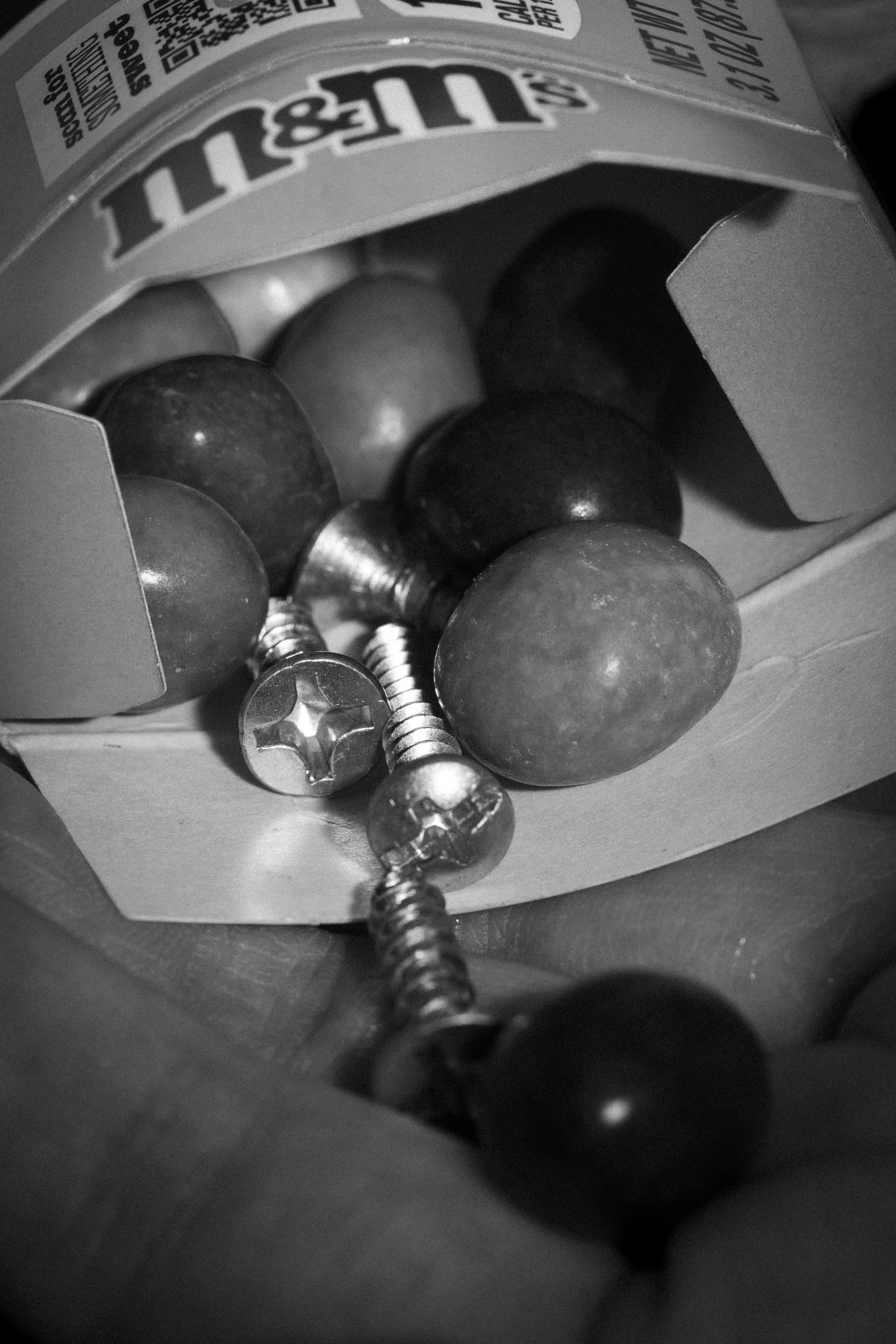
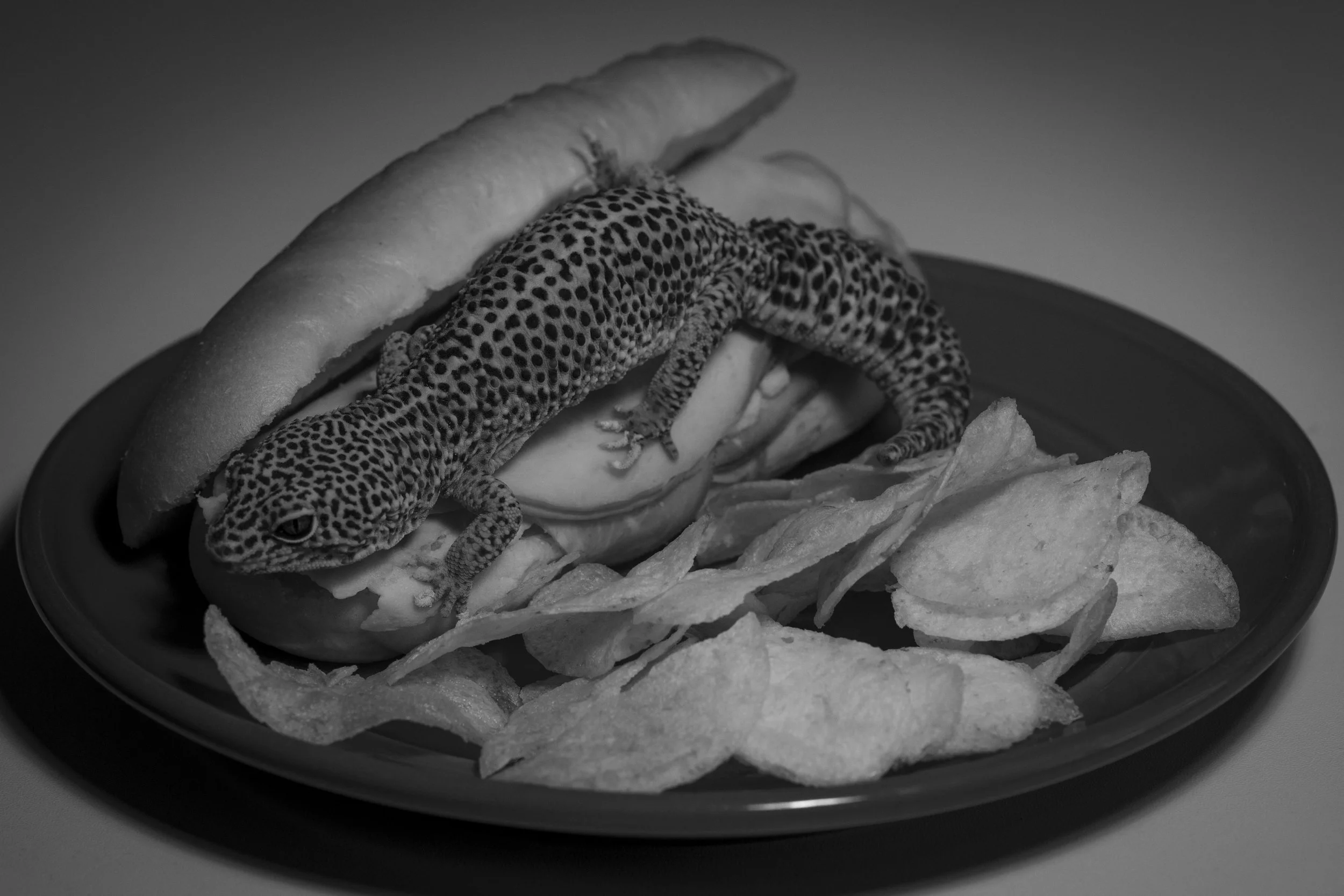
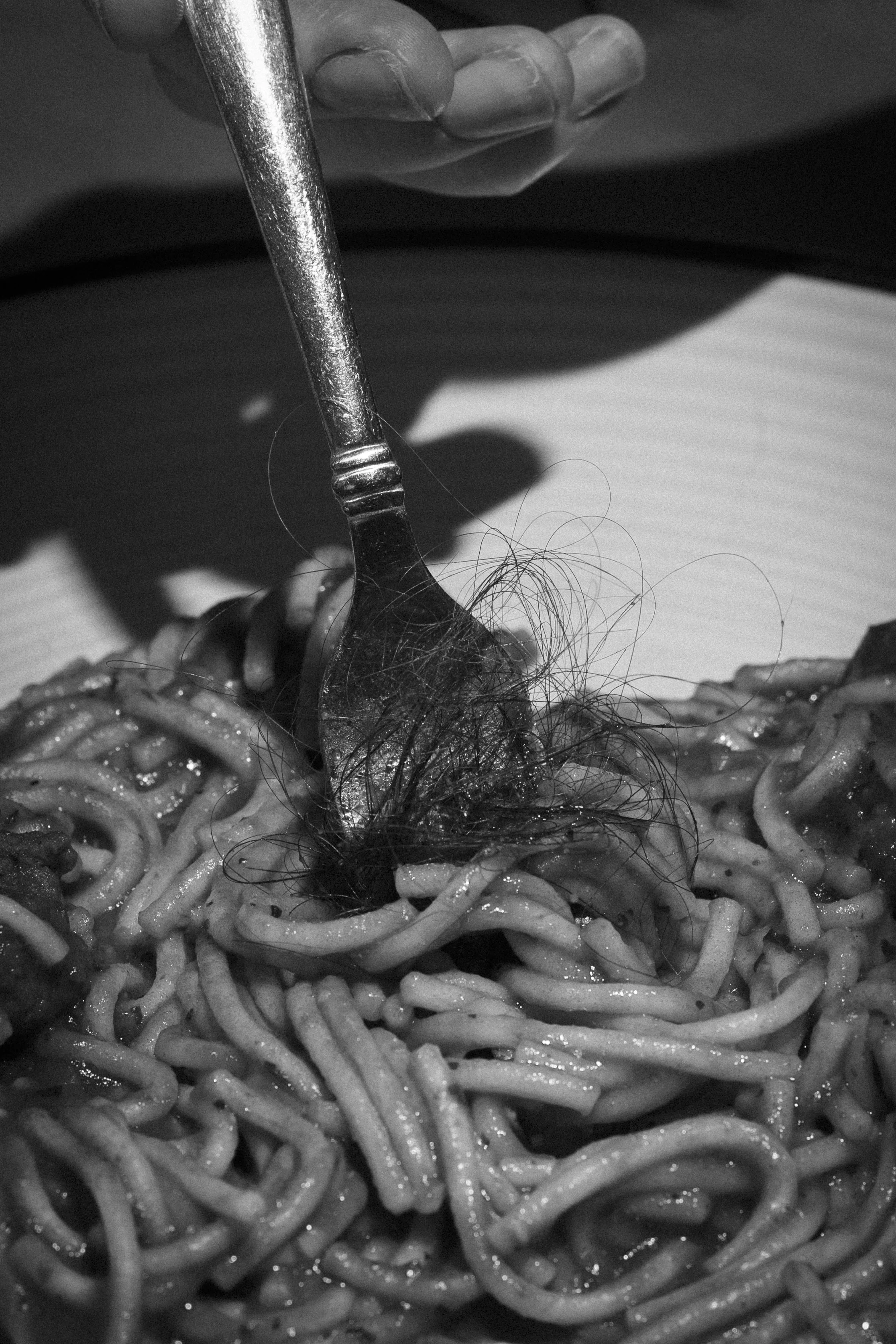
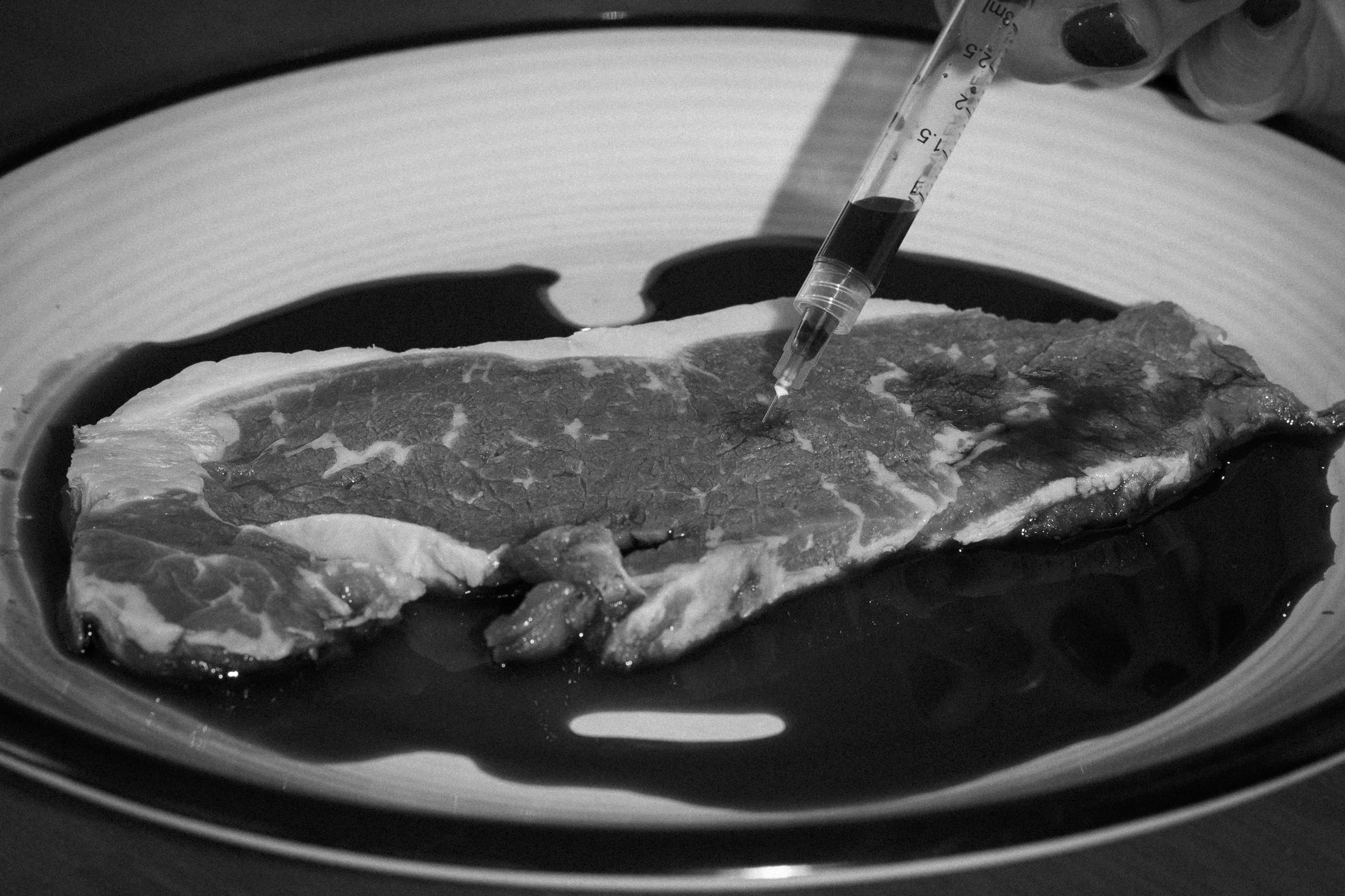
Rather than documenting these experiences literally, the photographs construct exaggerated, theatrical scenarios that visualize the psychological landscape of living with uncertainty. They use humor, absurdity, and surrealism to externalize fears that are often invisible, transforming ordinary food into something simultaneously familiar and unsettling. The work occupies the space between attraction and repulsion, inviting viewers to question their own assumptions about what is safe, desirable, or trustworthy.
The title, The Food Network, points to the many systems that connect us to food, biological, cultural, industrial, and emotional. It also suggests the invisible web of trust required every time we eat. Like venom that is harmless to one creature but devastating to another, food is never universally safe. How do we learn to trust the very thing we cannot live without?

National Health Crisis: The Peanut Corporation of America
In 2008 and 2009, a deadly salmonella outbreak spread across the United States, sickening hundreds of people and eventually killing nine. At the center of the outbreak was the Peanut Corporation of America, a Georgia-based company that supplied peanut products used in thousands of foods in US stores.
The outbreak began quietly. In late 2008, health officials had detected an unusual strain of salmonella appearing in multiple states, but narrowing down the cause was difficult. Investigators eventually traced the bacteria to peanut butter and peanut products produced by PCA’s processing plant in Blakely, Georgia. By April 2009, 714 cases had been identified across 46 states.
What made the outbreak particularly disturbing was the evidence that the contamination was not a simple accident. According to investigators, the Peanut Corporation of America’s own internal testing had detected salmonella in its products multiple times before the outbreak became public, but rather than stopping production and alerting customers, the company continued shipping products. Federal officials later said PCA had knowingly shipped contaminated peanut products on numerous occasions.
Conditions inside the Blakely facility also raised serious concerns. Investigators found sanitation problems, including evidence of insects, structural openings and other conditions that could allow contamination to occur. The recalls grew extensive because the company’s products were not usually sold directly to consumers. Instead, PCA supplied peanut butter and peanut paste to other food manufacturers, meaning contaminated ingredients could end up in crackers, cookies, cereal, candy and various foods. As officials expanded the recall, thousands of products were pulled from US store shelves.
The Peanut Corporation of America’s salmonella outbreak also exposed weaknesses in the nation's food-safety system. Federal officials did not initially know about PCA's positive internal tests because companies were not required to routinely report those results. The government eventually obtained the company's testing records and discovered the extent of the problem, but this was after the damage of the outbreak was already done. The outbreak ultimately resulted in one of the largest food recalls in U.S. history, with more than 3,900 peanut-containing products recalled.
For consumers, the crisis demonstrated how a single contaminated ingredient could travel through an enormous food-supply chain before anyone realized there was a problem.
For PCA executives, the consequences were eventually criminal. The company's former chief executive, Stuart Parnell, was convicted and sentenced to 28 years in prison for fraud, conspiracy, and knowingly shipping salmonella-tainted peanut products, making the case a landmark prosecution in food-safety history.


Political Health Crisis: Real Water
In late 2020, several children in Nevada developed acute non-viral hepatitis, a serious form of liver inflammation that can cause liver failure. The illnesses initially appeared unrelated, but investigators eventually noticed an unexpected connection among the affected families: they had all been drinking Real Water, an alkaline water product marketed as a healthier alternative to ordinary drinking water.
Real Water was a Nevada-based company operated by Brent Jones, who served as the company's president and had previously served as a Republican member of the Nevada Assembly from 2016 to 2018. The company promoted its alkaline water as a healthier alternative to conventional bottled water and made claims suggesting that its products offered health benefits beyond those of ordinary drinking water.
As health officials investigated the illnesses, they identified 21 probable cases and four suspected cases associated with Real Water. Twenty-one people were hospitalized, while one patient died. Several of the most serious cases involved children who developed acute liver failure, prompting increased scrutiny of the product and the company's manufacturing practices. Investigators began examining whether something in the water or the production process could have caused the liver damage.
In March 2021, Real Water recalled all of its drinking-water products and concentrates. The FDA investigated the company and its manufacturing practices and raised concerns about the company's response to the investigation, including its continued promotion of the products after the recall. In May 2021, the United States filed a federal lawsuit against Real Water, its parent company AffinityLifestyles.com, and Brent Jones. Rather than going to trial, the defendant consented to a federal court's permanent injunction without admitting the alleged violations. The court order permanently prohibited Jones from manufacturing, processing, preparing, bottling, packing, labeling, holding, or distributing food products unless he first met extensive FDA requirements. Real Water was also required to destroy remaining bottled-water products in their possession.
Although investigators found a strong association between consumption of Real Water and the illnesses, they were unable to determine the exact substance that caused the liver damage. The investigation nevertheless provided compelling evidence that the product was connected to the outbreak. The case became a significant example of the potential dangers associated with products marketed as health-enhancing without sufficient evidence or oversight. What began as a series of unexplained illnesses among Nevada families ultimately resulted in hospitalizations, a death, a major product recall, and the permanent removal of Real Water products from the market.
[Swindled]. (2021, September 12). S5 Ep70: The Outbreak (Peanut Corporation of America) [Podcast]. Swindled Podcast. https://swindledpodcast.com/podcast/70-the-outbreak/
[Swindled]. (2021, September 12). S8 Ep107: The Technology (Real Water) [Podcast]. Swindled Podcast. https://swindledpodcast.com/podcast/107-the-technology/
Morgan Brandt, 2026
Displayed at RDMT Student Gallery at Truckee Meadows Community College in Reno, NV from September 4-October 2, 2026.